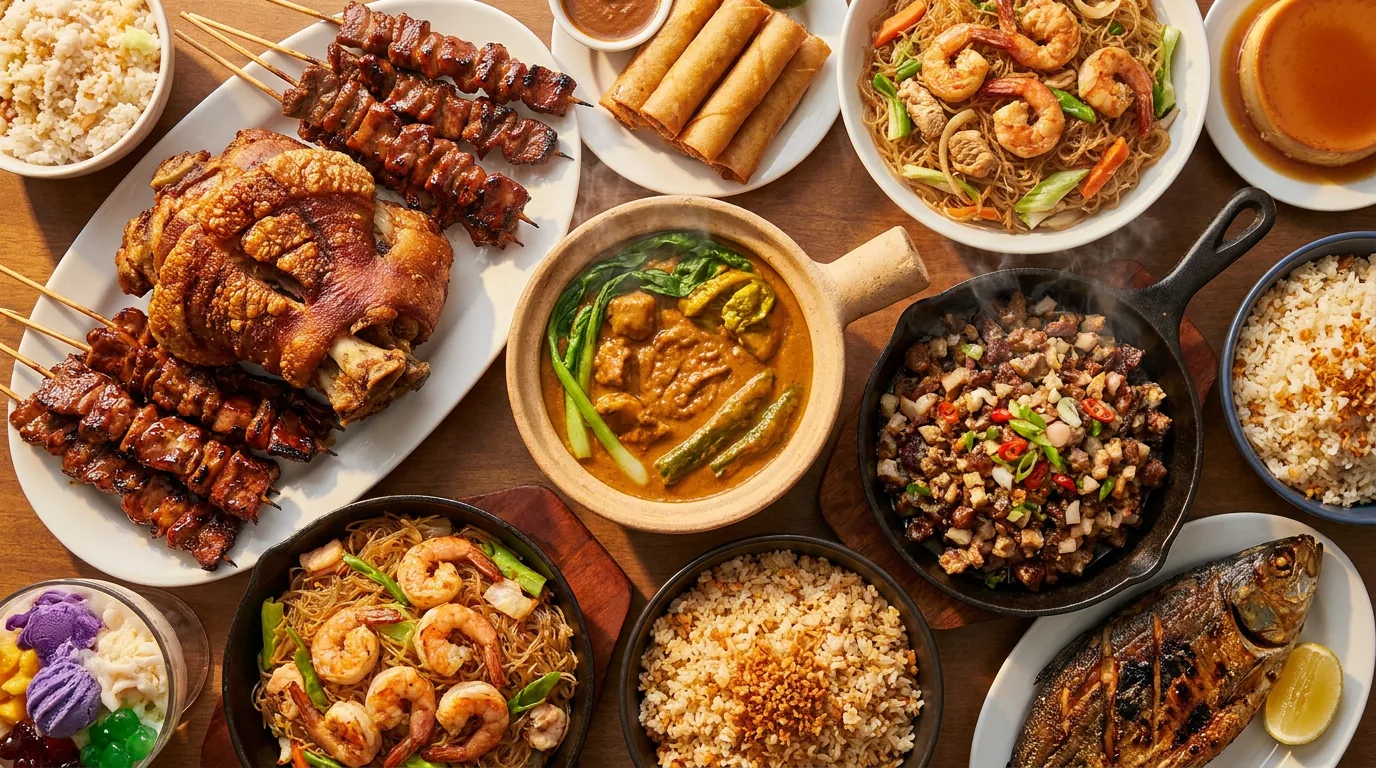
A full Filipino spread — savory dishes and sweets together on a warm wooden table

A Filipino food journal

The Filipino table,
noon at ngayon.

Savory classics and beloved sweets — from adobo and sinigang to leche flan and halo-halo — each kept in two forms: the traditional it grew up as, and the modern it has become.

ˈhɑː·pag  ·  noun, Tagalog — the table set for a meal

The Story

Where heritage meets the modern table.

Filipino food is a story you can eat — of Spanish galleons and Chinese traders, of grandmothers stirring ube over a low flame and smoke rising from a lechon spit, of fiestas where the table groans with stews, rice, and sugar.

Hapag — the table set for a meal — is a loving study of that story. For every dish we keep two recipes side by side: the traditional version our lola would recognize, and the modern riff that made it famous again — the adobo fried rice, the minimalist halo-halo, the kare-kare taco.

The idea is simple: honor the roots, celebrate the reinvention. Every recipe here is researched from trusted Filipino kitchens, with complete steps you can actually follow.

The Collection

The Filipino table, two ways.

Savory and sweet — each in its traditional and modern form. Tap any card for the full recipe.

Dish
Noon at Ngayon

Noon at Ngayon

Two kitchens, one table.

Noon means "then." Ngayon means "now." Put them together and you have the great story of Filipino food — every dish has a yesterday and a today, and both deserve a seat at the hapag.

Noon · Traditional

Lutong-bahay

The taste of then

Noon is the kitchen of memory — the recipe your lola knew by heart, learned not from a book but by watching, tasting, and stirring beside someone you love. Adobo simmered low until the meat surrenders. Sinigang sharpened with real tamarind. Kare-kare stirred patient and thick. These are the dishes of home, made the slow, sure way.

Why it matters: It keeps more than recipes alive — it carries family stories, seasons, and a sense of belonging forward through food.

Ngayon · Modern

The Reinvention

Tradition, seen anew

Ngayon takes the flavors we grew up with and gives them new ways to be tasted. Adobo folded into fried rice, kare-kare tucked into a taco, halaya spun into cake — familiar tastes meeting new techniques, new audiences, and ideas from around the world. The form may change, but the roots stay.

Why it matters: Reinvention lets a living food culture grow — carrying Filipino flavors to new generations and new tables, another way to celebrate where they began.

The real story is not noon versus ngayon. It is noon becoming the foundation for ngayon — one preserves the memory, the other carries it forward. Both have a place at the hapag.